Terms and Conditions of Service

Patient Care Focus: Consent
Welcome to modernised Audiology.
We believe that exceptional ear care is built on transparent communication, physical safety, and mutual respect. This page explains what you can expect during your appointment and how we partner with you to look after your hearing health.
1. Your Care, Your Choice
This overview applies to all of the professional clinical services we provide. By proceeding with an appointment at Waves Hearing, you are partnering with our qualified clinicians to perform the necessary assessments and procedures to manage your ear health. We always discuss our findings with you before beginning any treatment.
2. What We Do: Our Clinical Procedures
Depending on your unique needs, your clinician may recommend one or more of the following specialized procedures:
Gentle Ear Clearance: Safe removal of earwax, dry skin, or debris. We use professional methods tailored to your comfort, including aural microsuction (a gentle vacuum), manual removal (using specialized curettes or loops), or warm water irrigation.
Diagnostics & Precision Testing: We perform visual examinations of your ear canal (otoscopy) and comprehensive hearing assessments (audiometry). If you are fitted with hearing aids, we use Real Ear Measurements (REMs)—which involve placing a tiny probe microphone into the ear canal - to verify that your hearing aids are perfectly calibrated to your prescription.
Custom Ear Impressions: To create custom ear-pieces or hearing instruments, we gently place a small foam or cotton dam into your ear canal before applying a soft silicone impression material to mould the exact physical shape of your ear.
3. Your Safety and Comfort
Your safety is our absolute priority. All procedures are performed to the highest British professional standards (BAA/BSA).
Understanding the Risks: While these treatments are routine and safe, minor side effects like small canal abrasions, bruising, mild temporary bleeding, a brief flare-up of tinnitus, or mild discomfort can occasionally happen. Extremely rare but possible risks include eardrum perforation or infection.
Pause or stop: You are always in control and being monitored throughout. Any indications from you of discomfort, or if you feel sudden pain, distress, or simply need a break, we will stop immediately.
Staying Still: For your safety, it is very important to remain adequately still while we work. If you feel an unexpected cough, sneeze, or movement coming on, please let your clinician know immediately so they can safely pull back.
Your Medical History: To keep you safe, we rely on accurate information regarding your ears. Please let us know if you are taking blood-thinning medication, have had previous ear surgeries, or have a history of an existing eardrum perforation.
The Right to Stop: Clinical Safety & Suitability
By booking an appointment and agreeing to our Consent terms, you acknowledge that the clinician has a duty of care to ensure all procedures are carried out safely. You understand that the clinician reserves the absolute right to refuse to proceed with, pause, or completely halt a procedure if:
A physical examination on the day reveals a contraindication or clinical reason that makes the procedure unsafe or unsuitable.
Sudden movement that cannot be controlled for, or severe discomfort prevents the safe use of clinical instruments.
In the rare occasions that the appointment cannot proceed or is stopped early due to these clinical safety factors, the standard consultation fee remains payable to cover the clinician's time and professional assessment. Of course, bespoke guidance on how to safely proceed will be provided to you in this case.
4. Paediatric Care & Our Promise to Children
We treat your mini humans with the utmost care and emotional sensitivity too.
Parental Support: As the legal parent or guardian, you authorise our clinician to perform these procedures on your child.
The Right to Stop: Children have a voice in our clinic. In line with our detailed Safeguarding Policy, our clinicians reserve the right to cease a procedure if:
The child is unable to remain sufficiently still to ensure their physical safety.
The child appears distressed or uncomfortable to the point that continuing would not be in their best clinical or emotional interest.
Clinical Discretion: Our clinician's professional judgment regarding a child's well-being and safety is always final. We will never force a procedure on a distressed child.
5. What Happens If We Pause?
If we need to stop a procedure based on a child's distress or movement, please don't worry—it is a completely normal part of paediatric care.
When a pause happens, our priority is to reset and reassess the situation safely. We will take a step back, give your child a moment to catch their breath, and talk through options with you. Because our clinician's decision to stop based on well-being is final, we will work together at your child's pace to determine if we can adjust our approach creatively, or if it is in their best interest to reschedule for another day.
6. Your Private Data & Health Records
We handle your personal and clinical data with the highest level of security and confidentiality.
Accuracy: We request that the medical history provided (including history of surgeries, blood-thinning medication, or perforated eardrums) is fully accurate and complete to aid in proper care.
Secure Retention: In strict accordance with Scottish Health Record policies, your clinical notes and data are stored securely for a minimum of 11 years.
Sharing with Care: We only share your records with other medical professionals—such as your GP or an ENT specialist—when it is directly in the interest of your direct care.
✋
Microsuction Services
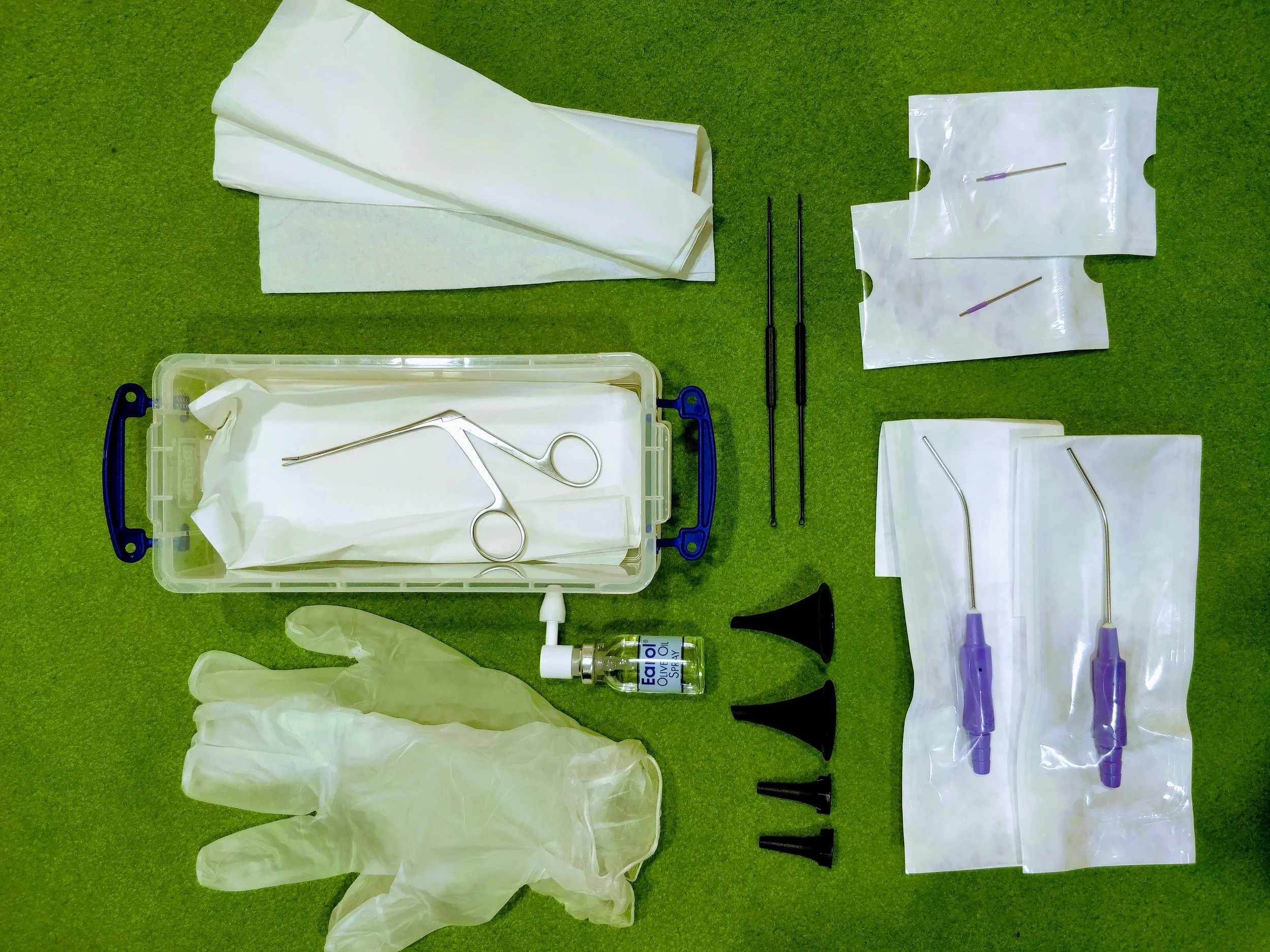
During your appointment, it may be indicated upon inspection of your ear canal(s) that you need microsuction for wax / skin debris / other obstructive material. Microsuction is a removal technique which is considered more reliably safe compared to other methods such as water irrigation / syringing. However, syringing, irrigation, or manual removal may still be undertaken if considered to be more appropriate by the clinician. Your removal will be performed by a trained Audiologist or clinician directly supervised by a trained Audiologist working to the protocols set out within The British Academy of Audiology, The British Society of Audiology and industry-standard Aural Micro Suction Procedures Manuals.
The suction unit that is used for the procedure of microsuction is CE marked for its intended designed to remove fluids from the airway or respiratory support system and infectious materials from wounds. This does not explicitly state the ear canal but is widely recognised UK-wide as being the most appropriate adapted-use machine for the procedure of aural micro-suction.
Incidents during ear wax removal or ear canal impression taking are extremely uncommon, especially with endoscopic observation. However, it is important to know that - just as with any procedure from a clinical professional - there is always the low possibility of minor risks that can occur and, more importantly, these are deemed to be acceptable include: minor abrasive damage to the ear canal which can result in bruising or less commonly some minor bleeding; mild discomfort; a mild and short-term tinnitus immediately following the procedure.
To ensure the risk of complication is minimal, it is essential that accurate past medical history is supplied to our clinicians. More serious risk to the ear or eardrum can occur if the client does cannot remain adequately still during the procedure. Clients should always inform their clinician of any likely movements both prior to the procedure or immediately before an intended movement (including but not limited to: nervous tremors; head and/or neck spasms; coughing; sneezing).
Low probability but possible outcomes, complications, side-effects and material risks inherent in the procedure include, but are not limited to, the incomplete removal of ear wax requiring a return visit (for severely impacted wax), persistent tinnitus, perforation of the eardrum, hearing loss; infection; impression material being uncomfortable to remove; impression material getting stuck in the ear and needing ENT specialist removal. All of these risks are mitigated to an absolute minimum prior to, during and post-procedure.
To keep the risk of infection to a minimum, most equipment used that will come into contact with your ear is single-use. Where this isn't possible, there is regular decontamination of all equipment that may come into contact with you before and after every single client. There is always a risk that the delicate micro-organisms of the ears may already have an infection present or removal process disrupts the balance or flora of microorganisms so infection may occur once outwith the clinician's care. You are encouraged and always welcome to contact Waves / your clinician for advice or a follow-up visit should you experience any new sensations to your ear or any new concerns.
By agreeing to these terms and conditions, you accept that you have read and understood the possible complications that may occur and are happy to proceed in the knowledge that these are unlikely outcomes but you consent to the procedure if it is agreed between you and the clinician. In addition to this consent form, verbal consent from yourself / (the parent / guardian in cases of children under 16) will also be required prior to the procedure itself.
The answers you provide within the Intake Forms will be stored along with other patient data and held as part of your case history. It will only be shared with other medical professionals with your permission and in the interests of helping further your care. It will never be used for marketing purposes. These records shall be kept for a minimum of 11 Years from last attendance. This policy has been designed to be in-line with Data Retention Policy of NHS Scotland. (https://www.gov.scot/publications/health-records-services-retention-destruction-personal-health-records-policy/).